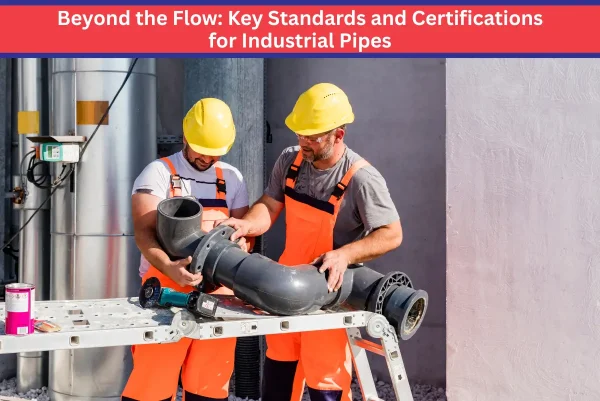






Industrial pipes are the unsung heroes of countless sectors. They silently transport vital fluids, gases, and materials that power our modern world. From petrochemical refineries and food processing plants to water treatment facilities, the integrity of these piping systems is super important.
But, the huge job these pipes do calls for strict rules. These are not just annoying forms. They are the base for safety, good work, protecting the earth, and keeping products high quality. Ignoring these rules can cause big problems like fires, spills, and lots of money lost. This article looks at the main rules and papers for industrial pipes. It makes sure they work right and are safe, not just move stuff.
Section 1: Understanding the Landscape of Industrial Pipe Standards
Why Standards Matter: Safety, Performance, and Reliability
Adhering to specific industry standards for pipes is a must. These rules help everyone involved stay safe and ensure things run smoothly. Ignoring them brings many risks. Following them brings many benefits.
Preventing Catastrophic Failures and Ensuring Personnel Safety
Pipe failures can be very dangerous. They can lead to explosions, toxic leaks, or even structural collapses. These events put workers and the public at serious risk. For example, poor welds or weak materials cause many industrial accidents. Studies show that piping failures contribute to a significant portion of industrial incidents, sometimes over 20%. Standards make sure pipes are strong and built right to handle tough jobs, lowering these risks.
Guaranteeing Product Purity and Process Efficiency
Standards play a big role in what materials get used for pipes. This helps stop bad stuff from getting into products. Think about the food or medicine you use. For these items, purity is key. Standards prevent unwanted chemicals or bits from mixing in, keeping everything clean. They also help liquid flow smoothly, which makes factory lines run better and faster.
Meeting Regulatory and Legal Obligations
Not following pipe standards can get companies into deep trouble. They might face big fines, plant shutdowns, or even lawsuits. Government groups like the Environmental Protection Agency (EPA) or the American Society of Mechanical Engineers (ASME) stress that following the rules is not optional. It is a legal must. This protects companies from legal problems down the road.
Section 2: Key Standards Organizations and Their Impact
Global and Regional Standard Bodies Shaping the Industry
Many important groups create the rules for industrial pipes. These organizations make sure pipes are made well and work safely. Their guidelines are used around the globe.
ASME (American Society of Mechanical Engineers)
ASME sets many vital codes for pipes. For example, ASME B31.1 covers power piping, often seen in power plants. ASME B31.3 handles process piping, common in chemical factories. These codes give detailed rules on how to design, make, install, and test piping systems. They are widely used across North America and beyond.
API (American Petroleum Institute)
API is very important for the oil and gas business. API standards like API 5L tell us about line pipe, which moves oil and gas long distances. API 6D sets rules for pipeline valves. These standards help make sure pipes and parts in harsh oil fields are safe and dependable.
ASTM International (formerly American Society for Testing and Materials)
ASTM creates many material specifications. These are the basic recipes for the metals pipes are made from. ASTM A106, for instance, sets rules for seamless carbon steel pipe. ASTM A312 covers stainless steel pipe. These material standards are often the building blocks for ASME and API codes. They tell manufacturers exactly what their pipes should be made of.
ISO (International Organization for Standardization)
ISO standards are used everywhere. ISO 15156, for example, gives rules for materials used in places with H2S gas, which can be very corrosive. These global standards help ensure pipes made in one country will work safely in another. This makes trade and projects easier for everyone.
Section 3: Essential Certifications for Industrial Pipes
Beyond Standards: Verifying Compliance and Quality
Just having standards is not enough. You also need proof that a pipe meets those standards. Certifications are like official stamps of approval. They show a pipe was made right and checks out.
Material Certifications (Mill Test Reports – MTRs)
Mill Test Reports, or MTRs, are like a pipe’s birth certificate. They list the pipe’s chemical make-up and how strong it is. This report shows if the pipe meets ASTM or European (EN) standards. Always check these reports closely. They prove the metal is what it says it is and can do the job. Make sure every pipe you buy comes with one.
Manufacturer Certifications (ISO 9001, API Monogram)
Some certifications show a company makes good products all the time. ISO 9001 means a manufacturer has a solid system for quality control. The API Monogram shows a maker follows specific API product rules. For important jobs, like in oil rigs, many companies insist on pipes from API Monogram approved makers. These certifications mean the factory cares about quality.
Product Certifications (e.g., CE Marking, UL Listing)
Product certifications mean a specific pipe part meets certain safety rules. CE Marking is needed for products sold in Europe. It shows the product meets EU safety, health, and environmental rules. UL Listing means a product passed safety tests in the United States. These marks help you trust that a product will work safely in its intended use.
Section 4: Specialized Piping Standards and Their Applications
Navigating Niche Requirements for Diverse Industries
Different industries need different kinds of pipes. What works for water might not work for chemicals. Standards often get very specific to match these varied needs.
Standards for High-Temperature and High-Pressure Applications
Some pipes handle extreme heat and pressure, like in power plants or chemical plants. Standards like those in ASME B31.1 and B31.3 give special guidance here. They cover materials that won’t melt or burst under pressure. For example, a power plant might run steam at 1000°F and 2000 psi. These standards make sure the pipe can take it.
Standards for Corrosive Environments and Chemical Transport
Pipes carrying harsh chemicals need special care. Some chemicals can eat through regular metal. This is why standards tell us to use special metals, like stainless steels, nickel alloys, or titanium. They also guide us on special coatings. ASTM and ISO have many rules for chemical resistance. Chemical factories rely on these rules to stop leaks and keep workers safe.
Standards for Food, Beverage, and Pharmaceutical Piping
For food, drinks, and medicines, pipes must be super clean. Here, standards focus on “hygienic design,” like ASME BPE (Bioprocessing Equipment). These rules make sure pipes are smooth inside. This stops germs from hiding. They also demand special ways to track materials. This helps prevent contamination. The Food and Drug Administration (FDA) has strong guidelines for pipe surfaces to keep products pure.
Section 5: Procurement and Inspection Best Practices
Ensuring Compliance from Selection to Installation
Choosing the right pipes is just the start. You need to make sure they meet all the rules, from when you buy them to when they are put in place. This helps avoid big problems later.
Specifying the Right Standards and Certifications
When you order pipes, be very clear about what you need. Think about the project requirements. What will the pipe carry? How hot or cold will it be? How much pressure? List the exact ASME, API, ASTM, or ISO standards you want. Make sure you also ask for all the certifications you need. Getting this right from the start saves a lot of headaches.
Verifying Certifications and Documentation
Once pipes arrive, someone needs to check the paperwork. Look closely at the Mill Test Reports. Do the numbers match what you asked for? Check manufacturer certs like ISO 9001. Are they current? Make sure all products have the right markings, like CE or UL. Always have a clear way to review these papers. This helps catch mistakes before pipes are installed.
The Role of Third-Party Inspection
Sometimes, it is smart to have an outside expert check your pipes. These third-party inspectors do not work for you or the pipe maker. They just check if everything follows the rules. They can watch pipes being made and installed. This extra set of eyes helps make sure standards and codes are truly met. It gives everyone more peace of mind.
Conclusion
Adhering to industry standards and getting proper certifications for industrial pipes is not just a good idea; it’s a must. These rules protect everyone and everything involved. Following them makes sure factories run well, last longer, and do not harm the planet. By investing in the right standards and certifications, you safeguard your business, your people, and our shared environment.